What does Montessori look like in the classroom ?
A Montessori classroom can look quite different from a traditional classroom.
Rather than every child completing the same task at the same time, children work through carefully prepared activities in reading, writing, mathematics, science, history, geography, the arts and practical life.
They receive lessons from the teacher, practise new skills using hands-on materials and gradually learn to make responsible choices about their work.
This does not mean children are left to do whatever they like. They have freedom within clear boundaries. The teacher carefully observes each child, keeps track of their progress and makes sure they are developing strong skills across all areas of the curriculum.
The Teacher
In Montessori, the teacher is often described as a guide.
The teacher’s role is to spark curiosity, introduce new ideas and help each child take the next step in their learning.
Because children do not all learn in exactly the same way or at the same pace, the teacher gets to know each child closely. They consider the child’s strengths, interests, learning style and current needs before presenting new material.
Some lessons are given individually. Others are taught in small groups or to the whole class. Children then have time to practise, revisit ideas and build confidence.
This allows a child to receive extra support in one area while moving ahead or exploring deeply in another.
Educating for Peace
Peace is a central part of Montessori education.
This begins with the everyday way children speak to one another, solve problems, care for the classroom and take responsibility for their community.
Children learn that freedom comes with responsibility. They are encouraged to listen, communicate respectfully, repair relationships and consider how their choices affect other people.
The mixed-age structure, emphasis on cooperation and non-competitive environment all help children develop a sense of social and moral responsibility.
Peace education also extends beyond the classroom. Through science, history, culture and environmental studies, children begin to understand their place in the wider world and their responsibility towards people, living things and the Earth.
Classroom Set Up
The Montessori classroom is designed to help children become capable and independent learners.
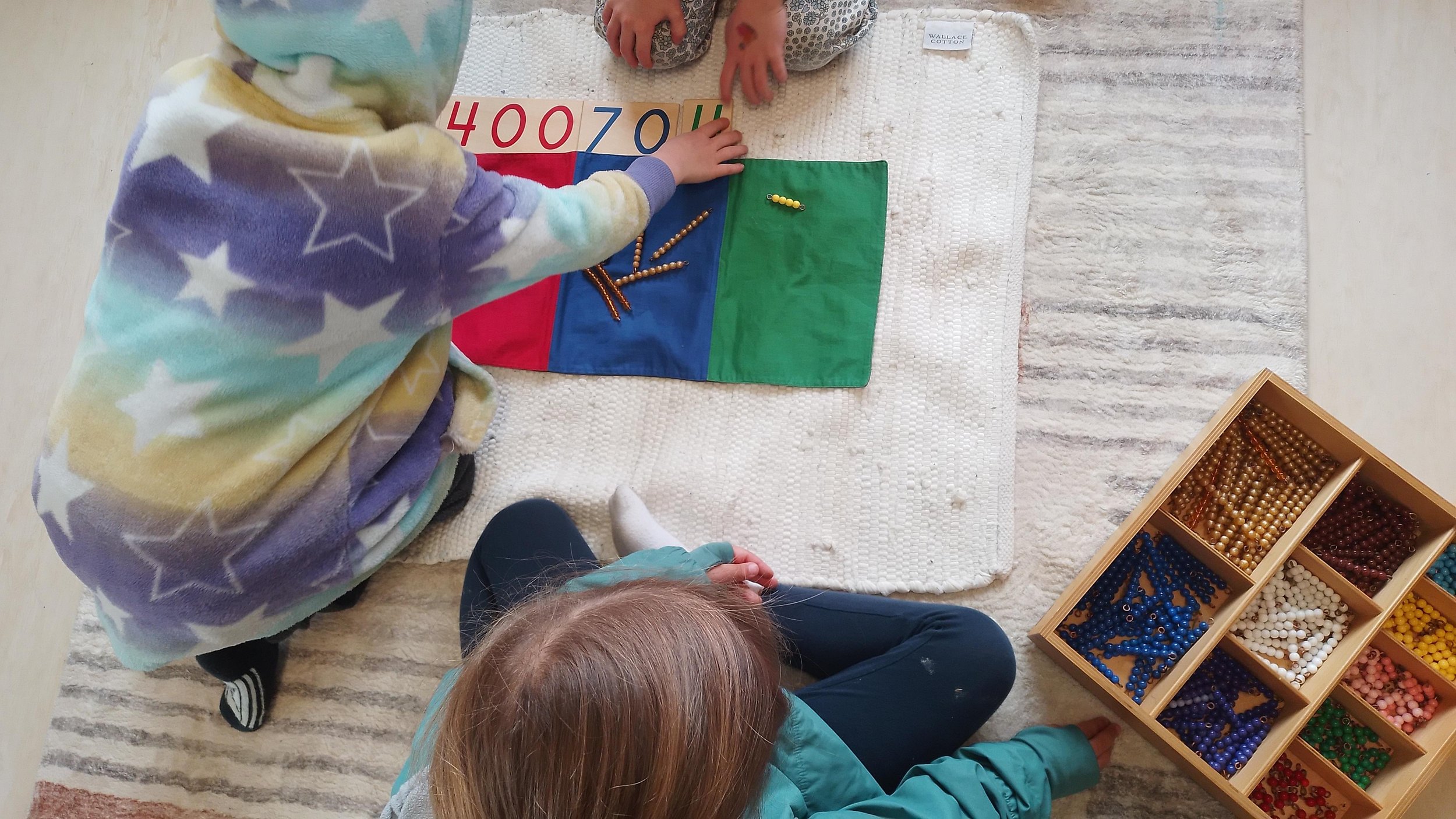
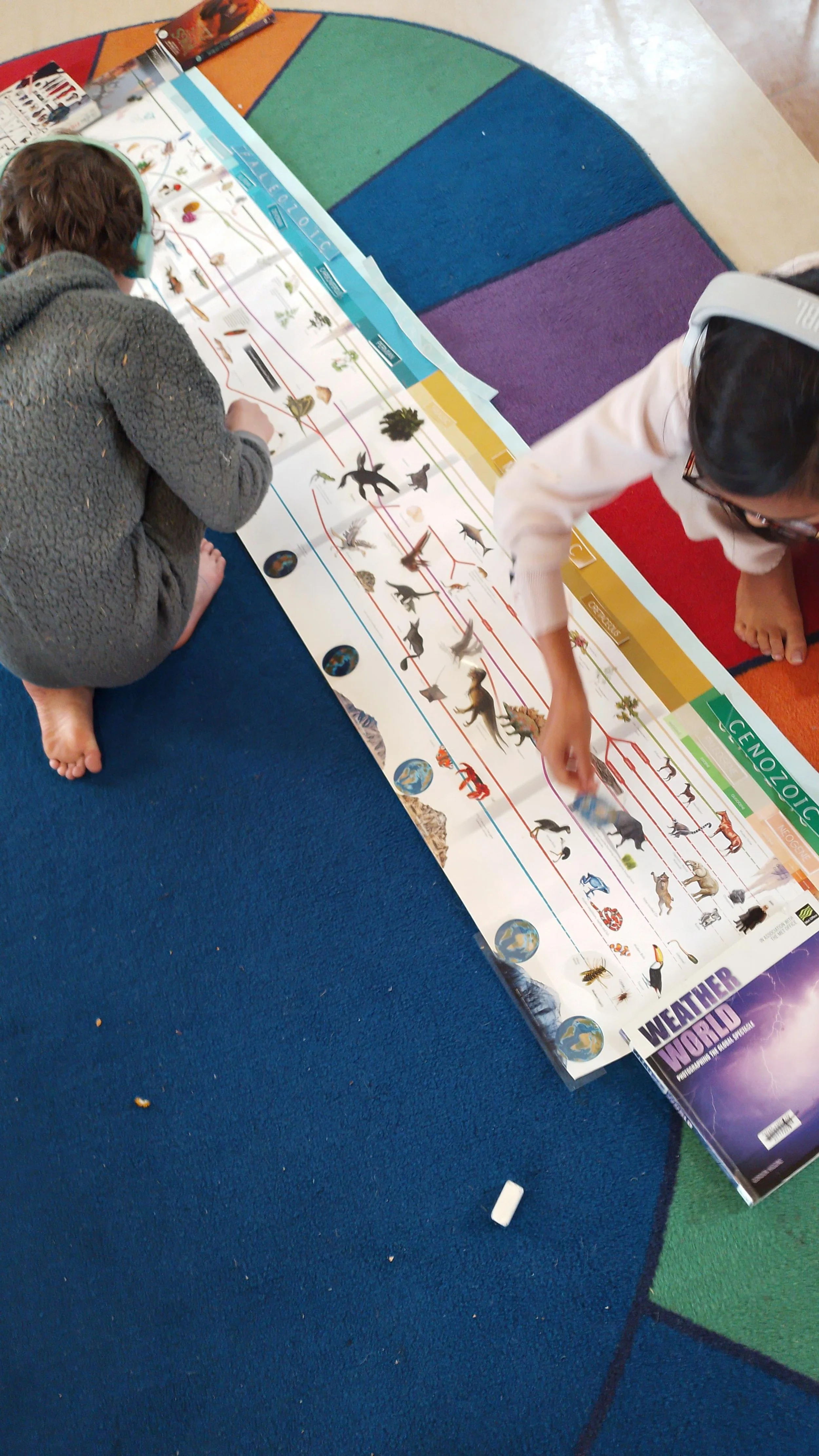
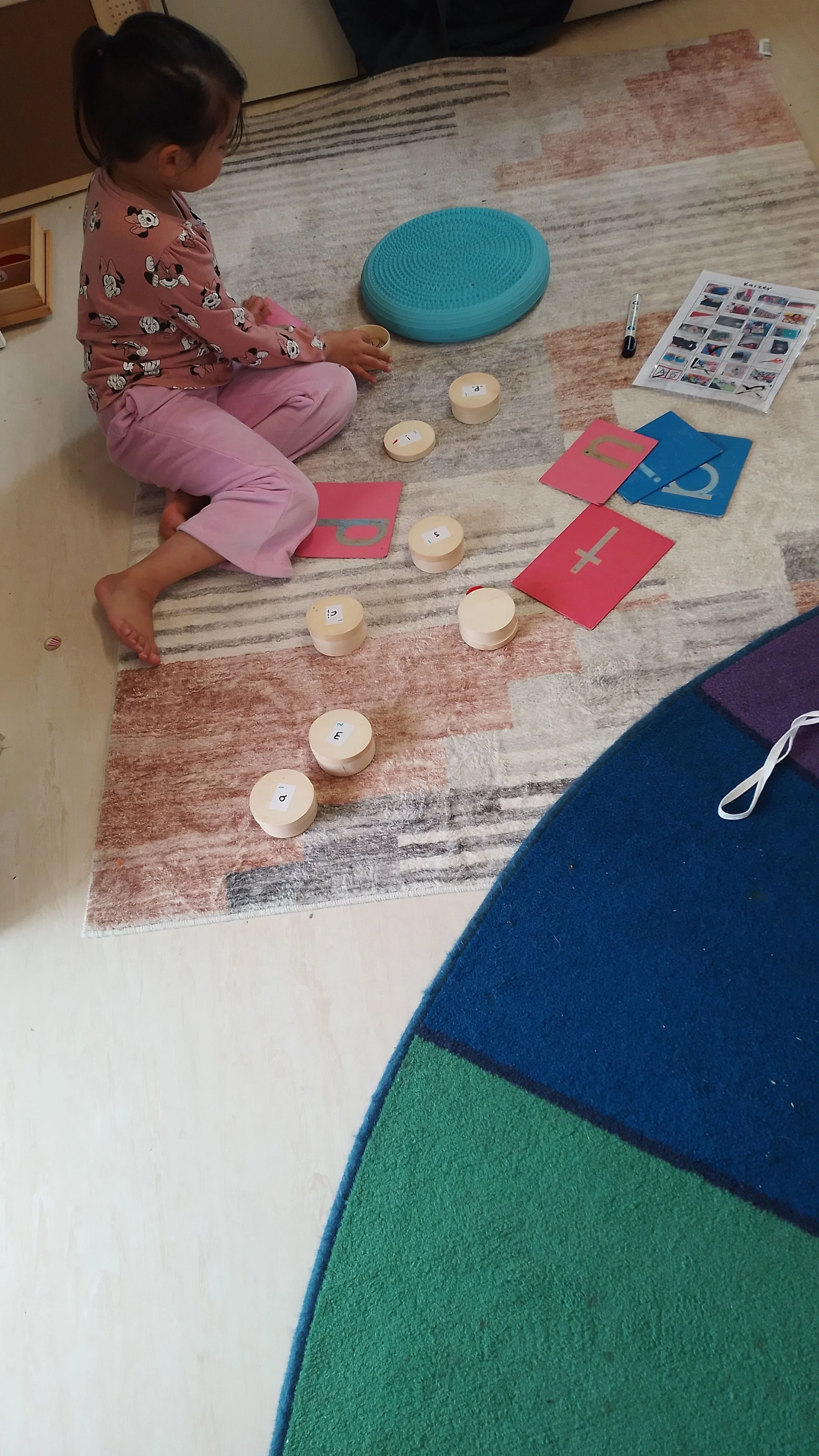
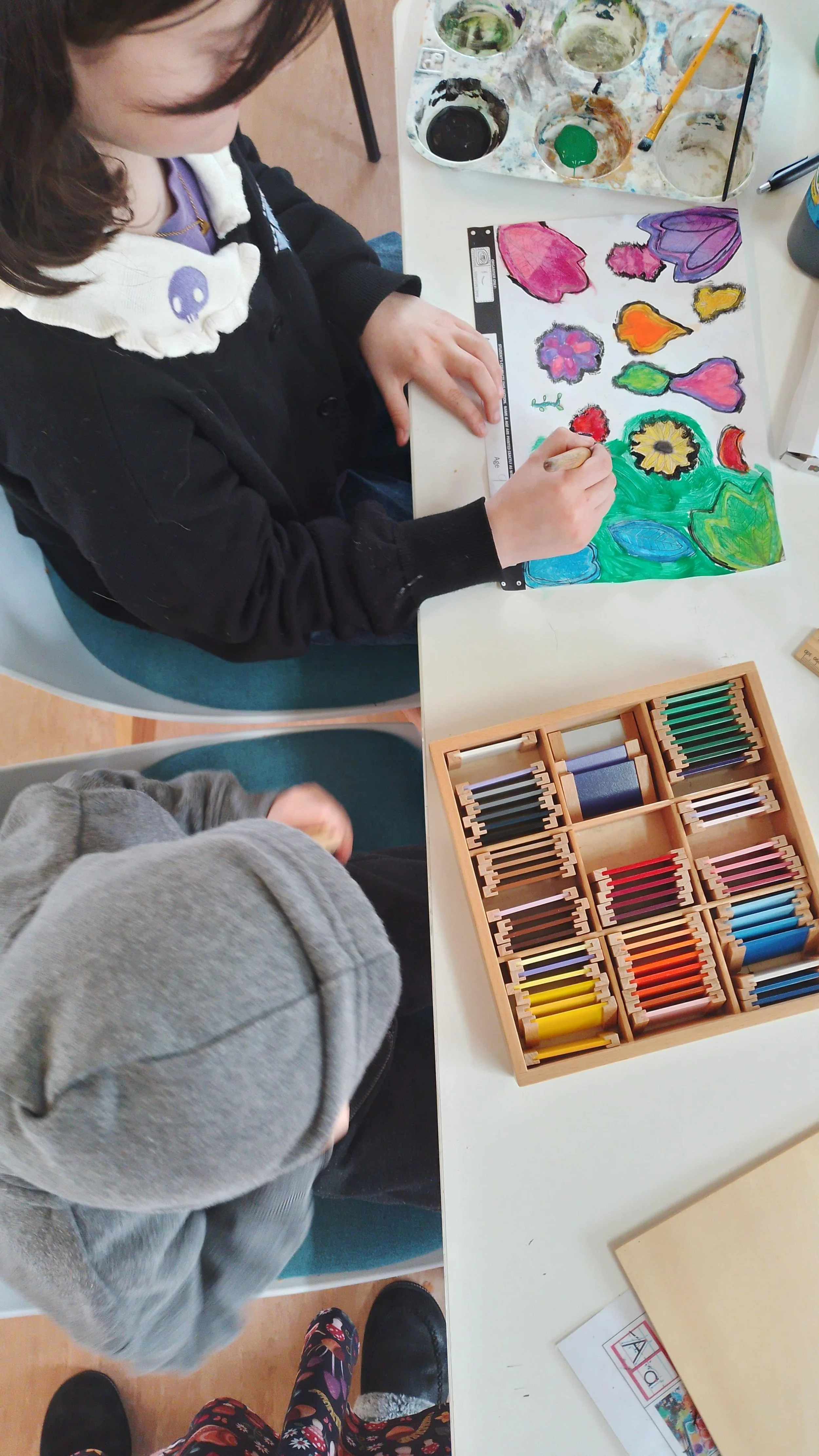
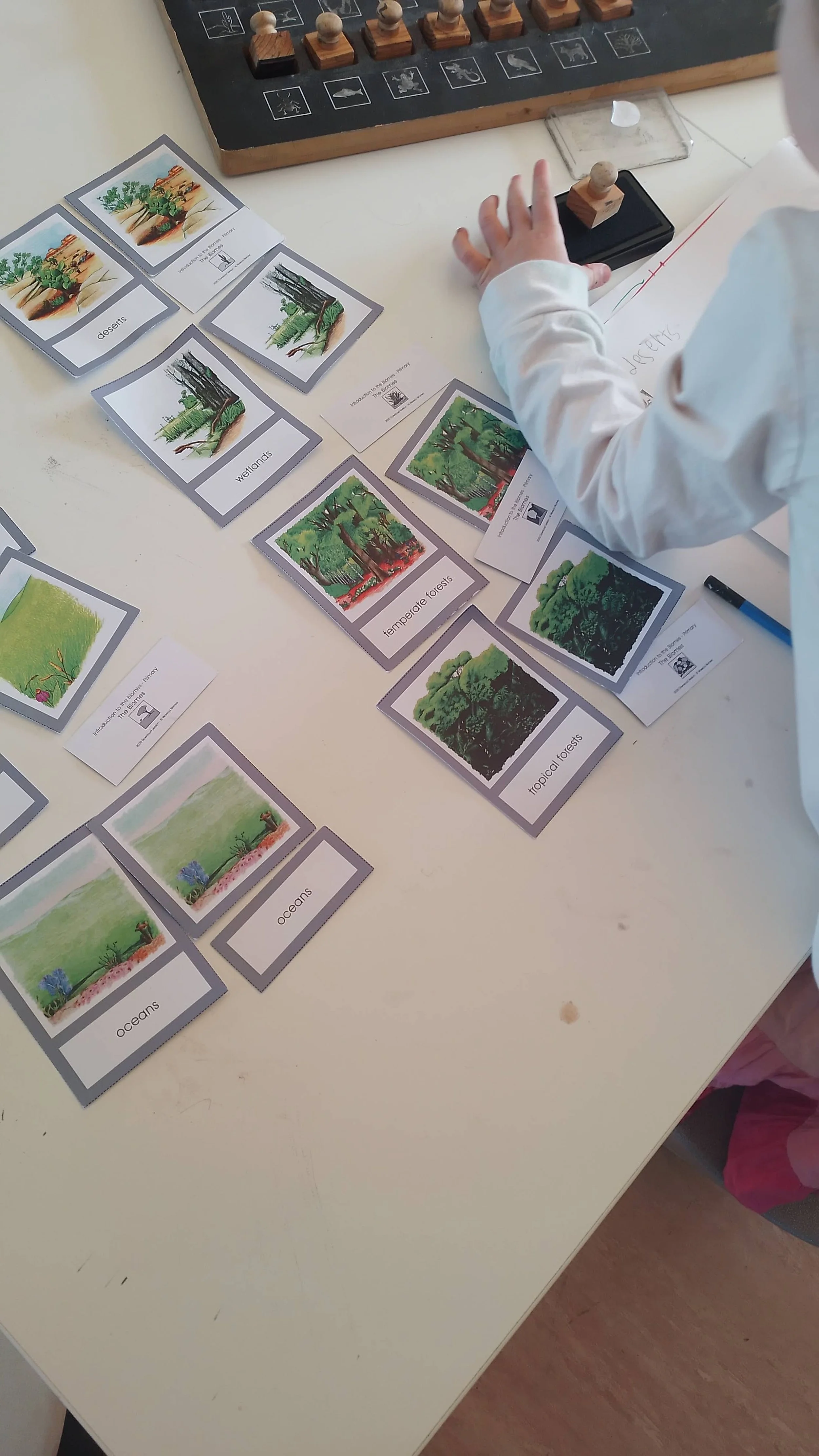
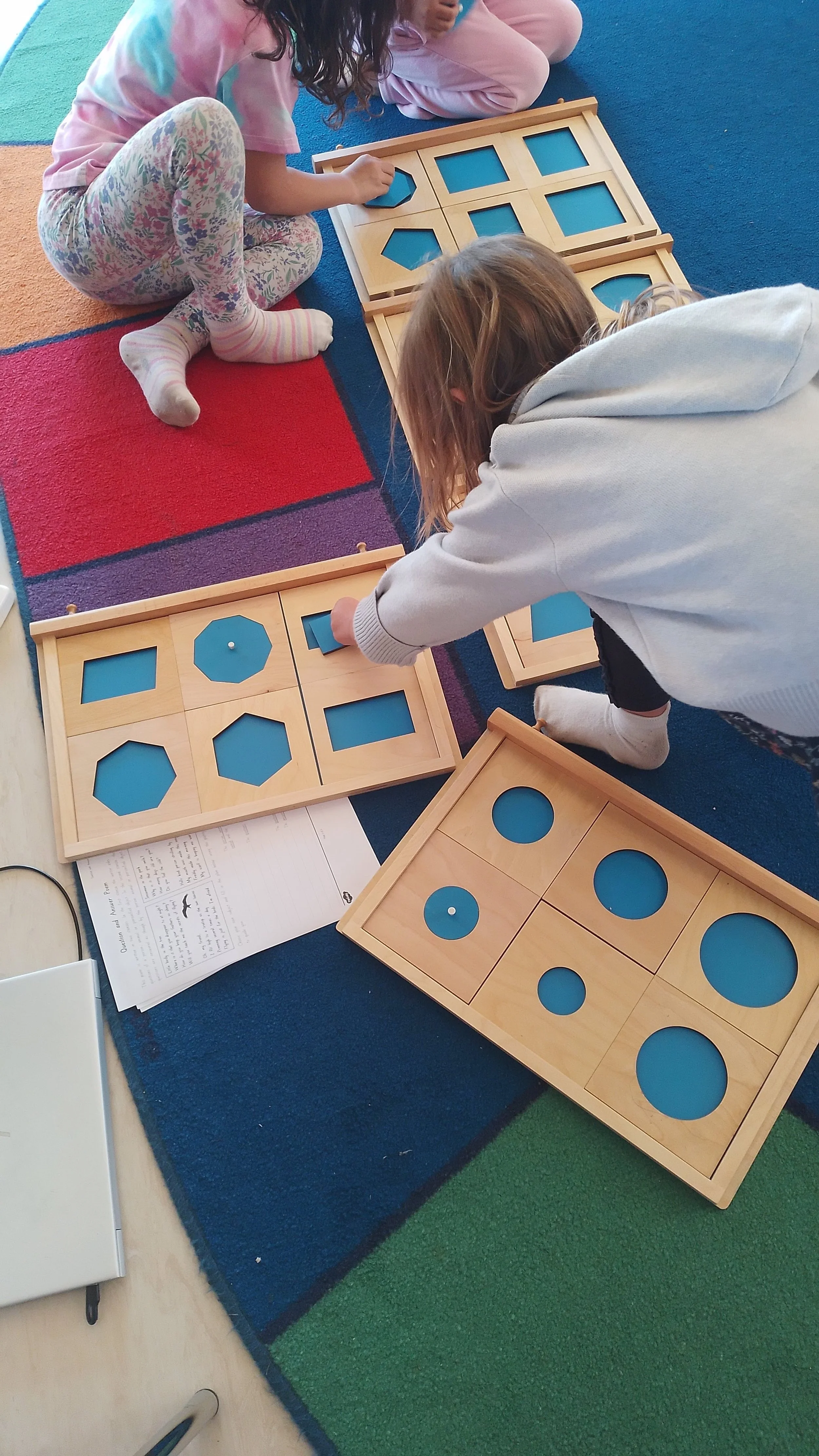
The shelves contain specially designed, hands-on materials for mathematics, language, science, history, geography and the arts. These materials help children move from concrete experiences towards more abstract understanding.
For example, a child may first use physical materials to explore a mathematical idea before recording it with numbers and symbols.
Children are shown how to use each material carefully. They may return to it as often as needed to practise, strengthen their understanding or explore the idea further.
The classroom is orderly and inviting, with materials placed where children can access and return them independently. This helps children develop concentration, responsibility, self-discipline and care for their environ
Three hour work cycle
One of the clearest differences between Montessori and many traditional classrooms is the long, uninterrupted work cycle.
Each morning, children have an extended period of approximately three hours in which to receive lessons, choose purposeful work, practise skills and explore areas of interest.
We have one three-hour morning work cycle on each school day.
Because the session is not constantly broken into short subject blocks, children have time to settle into their work, concentrate deeply and complete more substantial tasks.
A child might begin with mathematics, move to a reading lesson, continue a research project and finish by working with a friend.
Each child gradually develops their own productive rhythm while the teacher guides them towards an appropriate balance of learning.
Multi age classrooms
Montessori classrooms are intentionally mixed-age.
Maria Montessori believed it was unnatural to separate children strictly according to age. She saw the classroom as a community, similar to a large family, where children at different stages could learn from and support one another.
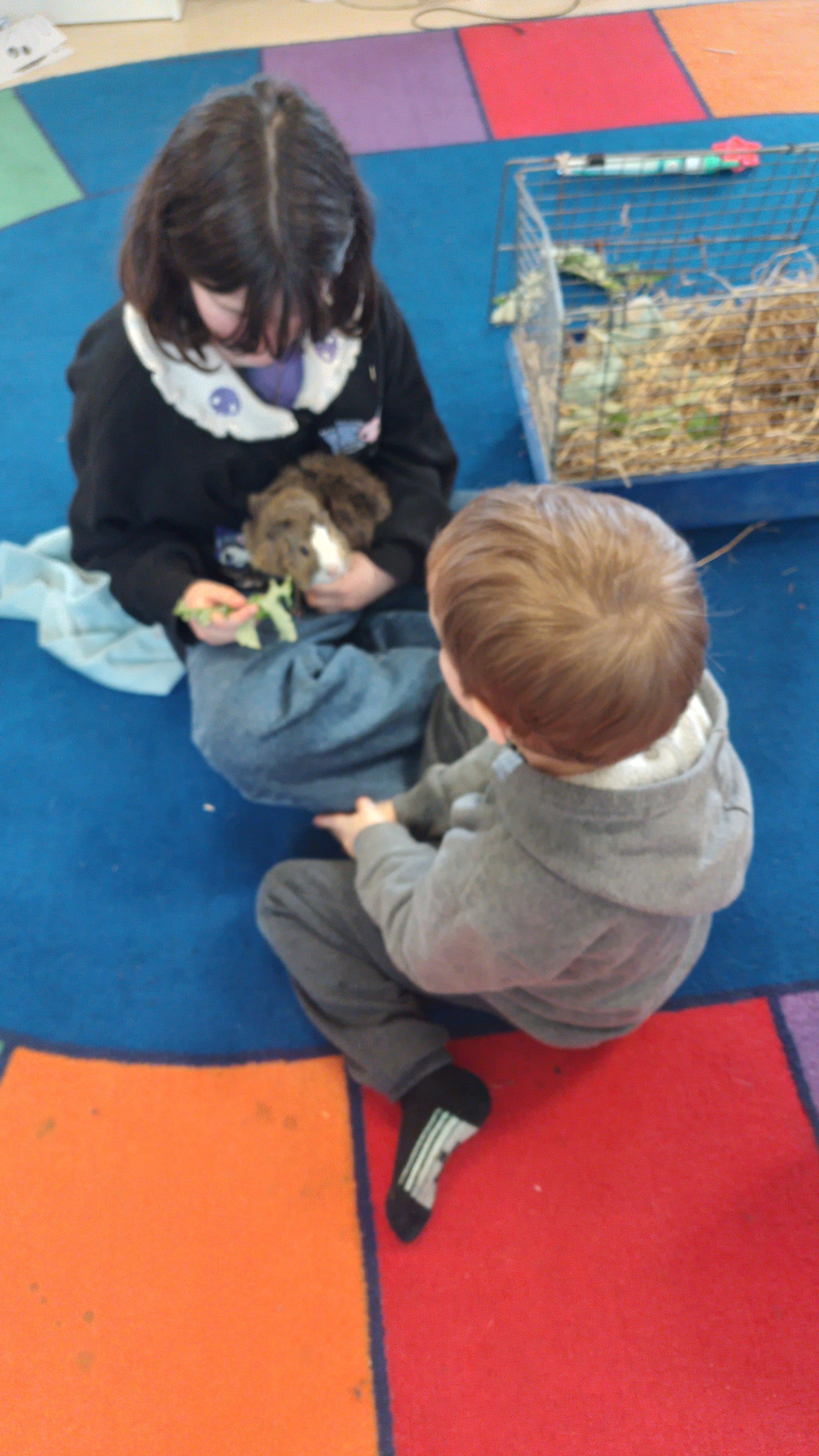
In a mixed-age class, younger children observe what older children are doing and begin to see what they may learn in the future. Older children strengthen their own understanding by helping others and develop patience, confidence and leadership.
Children are also less likely to see learning as a competition between same-age classmates. One child may be strong in mathematics, another in writing and another in practical work or social leadership.
Mixed-age learning allows children to be valued for what they contribute, rather than being compared only with others born in the same year.
As Montessori explained:
“The older children are interested in the younger, and the younger in the older.”